Categories
Boosting Your Confidence Building Confidence Improving Your Presentations Public Speaking Goals Public Speaking Tips

Public Speaking Goals Restart

We are halfway through 2021 now. How are you doing with your 2021 personal and professional goals? What about your public speaking goals?
Could you use a mid-year goals restart? Time to check-in and see what you can still accomplish in the second half of the year!

I may not be a trend setter (yet), but I am absolutely a goal setter. I am very big into setting personal and professional goals, and I talk about this A LOT on The A-Ha! Method Podcast. Sometimes I am more talk than action though. 😞

I am constantly trying to improve myself, my routine, my skills, etc., which can be a blessing and a curse—blessing because I am all about self improvement, curse because it can become a bit like striving for perfection, which is an unattainable goal…even for me.

In the past few years, I have started making year-long mantras instead of goals. The mantras give me a simple, easy to remember phrase that I can repeat to myself when times are tough. My friend Susan, who I talk about in Podcast Episode 6, also makes yearly mantras with me, and we just so happened to have the same mantra this year—”I Am Here.”

We had different reasons for this mantra, but it’s still fun that we had the same one for the same year. My “I am Here” mantra has two meanings:

  1. I tend to have a lot of imposter syndrome, and 2021 has pushed me out of my comfort zone a good bit so far. The “I am Here” saying reminds me that I am supposed to be at this meeting, give this presentation, talk about this subject, etc. Whether I feel ready or not, I am here, and I am going to do the best I can.
  2. I have taken on the unfortunate habit of multi-tasking—both at work and in my personal life. I want to be more present in life with my family and friends and not be on my phone all the time. I am here, I am focused, I am listening!
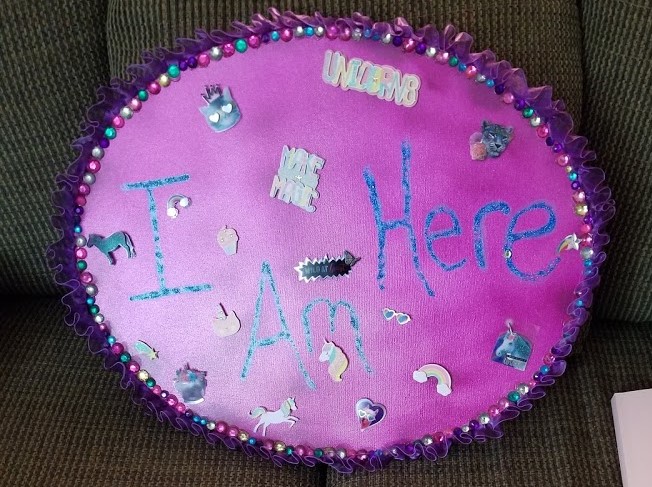
Picture of my 2021 Mantra Board that my friend Susan made me. Yes, we are in our 30’s and 40’s, and yes, I love every aspect of this special board!

So far, I have done okay with my 2021 mantra. I still want to be more present in everything I do, but that will take some time and more dedication. I have put myself out there more, and I am learning to be confident and continue to grow and learn from my mistakes. I will continue to work on this “I am Here” mantra, but now I also have some public speaking goals I want to add to the mix as well.


In the spirit of Quarter 3 just starting and us reaching the halfway mark in the year, I want to encourage you to sit down and review how you are doing with your goals so far. If things are going well, keep going and growing and glowing (this was my 2020 mantra)! If things could be improved, let’s do a mid-year goals restart and see if we can finish this year stronger physically and mentally than how we started. And if you don’t have any public speaking goals on your list yet, maybe it’s a good time to add some as well.

Here are my 3 public speaking goals/mantras for the second half of 2021 (I am putting it out on the internet, so no going back now!):  

  1. Quality over quantity
    • I have mentioned this on the A-Ha! Method Podcast and in other articles, but I really want this to be my big focus for the rest of this year. I want to work on crafting and developing my stories instead of just throwing out a bunch of stories and never telling them again. 
    • I set the goal to give 30 speeches this year, but I don’t have to give 30 different speeches. I would like to challenge myself by giving one speech topic five different times and truly experience the iterative and editing process. I’ll let you know how that goes. 
  1. Keep it simple
    • I have a tendency to overcomplicate things, like cramming lots of messages, takeaways, and lessons learned into a 5-7 minute Toastmasters speech and usually going over time.
    • In my sketches and improv classes, I tend to muddle the idea or forget the point of view to where you aren’t quite sure where it’s going or what I am trying to say. I want to be a better scene partner and writer and a simple way to do that is…keep it simple! 
    • I can get really wordy in my writing and also when I am facilitating meetings. Lots of run-on and long sentences back to back that really lose my audience. Keep it short, keep it simple! 
    • Keep it easy for my audience. Make sure my message and my meaning are easy to understand, and that will go a long way in my professional career and life!
  1. Embrace myself! 
    • This goes back to the imposter syndrome. I listen to some of my speeches and podcasts and think, “Why did I say that? Do I really sound like that? I really flubbed that sentence there.” I am definitely my own worst critic! I want to learn how to embrace myself—all the things I do well, all the mistakes I make, all my passions, all my quirks, all my silliness. Embrace it and stop wishing that I were someone else or as good as someone else, and just be me. 
    • I can keep striving to grow and fix some of these mistakes. However, if I can take the self-critic out of the situation, embrace myself, and be present, then I will take my speaking, my self-esteem, and my self-compassion to a new level. If I am constantly criticizing myself, I will forever limit myself!

I know all the SMART Goals advocates are pulling their hair out right now reading this. You have your way of making goals, and I have mine. These are my second half 2021 goals, and I am sticking to them! I will let you know how I fare at the end of the year!


There’s no magic time or age to wait to achieve your goals, and that includes public speaking goals. While I am using this half year mark as a chance to pause and reflect and also make more mantra goals for myself (all the mantras!), I want to remind you that you don’t have to wait until next week, next month, next birthday, next year to achieve your goals. You can challenge yourself now. You can go for your goals now! 

Want to conquer your fear of public speaking? Sign up for a course or training now! (Check out the A-Ha! Method: Public Speaking in a Time of Distraction course on Udemy.)

Want to give a big speech at work? Practice it now! (Come to one of our Speakers Alliance Public Speaking Practice Sessions.)

Want to give a Ted Talk? Can’t wait to hear it! Start working on your message now and practice it at our free sessions!

Want to step out of your comfort zone? Great! Get out of your own way and take one small step right NOW to start doing that.   

Cheers to the second half of 2021! Hope this mid-year goals restart helps you. Let’s check back in December 2021 and see how we did. 😀
Categories
Boosting Your Confidence Building Confidence Improving Your Presentations Practice Sessions Public Speaking Practice

Practice your next speech with us!

Each week the Speakers Alliance runs a FREE Public Speaking and Pitching Practice Clinic for people looking to improve their public speaking skills. Anyone who wants to practice a presentation, speech, sales pitch, social occasion speech, etc. is welcome to join and participate! If you do not have a speech or pitch prepared, you can still attend and listen to others practice and ask questions during the Q&A period.

Talks can be 5-6 minutes long. The panel will provide up to 3-5 minutes of feedback after your talk.

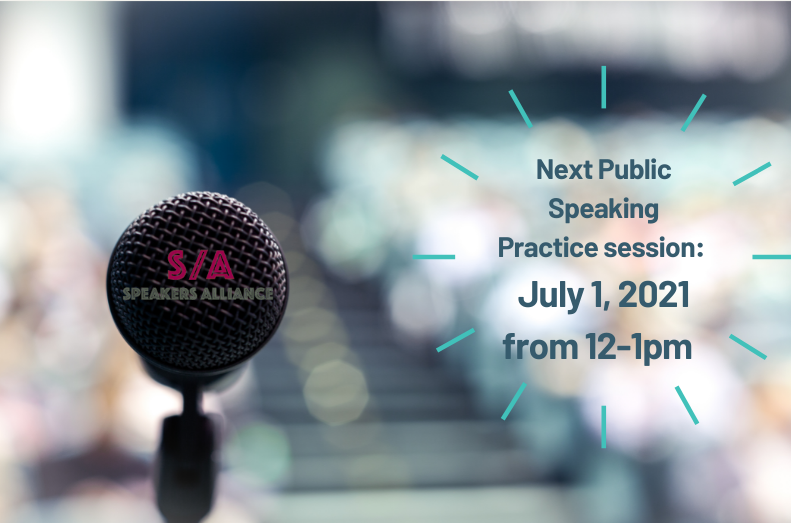
This week’s session is on Thursday, July 1 from 12-1pm PT.

Please note: We will be changing up the practice session times each week. Follow us on social media for the most up to date announcements.

Categories
Comedy and Public Speaking Humorous Speeches Improving Your Presentations Public Speaking Tips

How Sketch Comedy Helped Me Become a Better Speaker

For 2021, I set a goal for myself to take a comedy sketch writing class. I have been taking improv classes for over a year now, but sketch writing would be a new challenge for me. Whenever a funny scenario comes up in real life, I always say, “That could be an SNL sketch!,” but I never knew where to even start with writing it. In January, I signed up for the online Sketch Writing 101 Class at Rise Comedy. The class was only 4 weeks long with one class each Sunday for 2.5 hours, so it felt like an achievable goal. The first class we were told there would be homework, and we would be expected to write sketches on our own time. 

Each class we’d get a sketch assignment, pitch our ideas, and then pick one or two to write in full. At the next class, we would do a read through, give and get feedback and then punch-up (a comedy writer’s term meaning “to improve upon”) the jokes and concept. It was like our very own online writers’ room, and I enjoyed it way more than I thought I would.

During Sketch 101, I wrote a monologue based on my mom, a parody about anti-vaxxers in LA, and a premise-based sketch about a woman who pretends her stuffed animals are real pets on Zoom calls. My portfolio is ready if anyone is interested. 

Sketch 201 

I enjoyed 101 so much that I signed up for Sketch Writing 201, which started on March 28, 2021 and just wrapped up on April 18, 2021. Sketch 201 involved more collaborative writing with a partner, which was fun to write with different classmates. For 201, I co-wrote with my partners a sketch about 43-year-old ladies who love Disney way too much (this sketch was totally based on my friends and me) and a sketch about 3rd graders on strike at school. Again, my sketch portfolio is ready! SNL, call me! 😃

I really enjoyed 201 as well, and I plan to continue on with 301 when it is offered. I have never taken any creative writing classes before this EVER, and wow, have I been missing out! I loved the creative outlet! I know it will get harder as we start to put together an actual sketch show and cast people for parts, but one step at a time! 

Sketch Writing and Public Speaking

As I was going through my sketch classes this year, I couldn’t help but think about how the lessons of sketch comedy apply to public speaking as well. I didn’t take sketch writing to improve my public speaking skills, but I believe some of the key lessons can be helpful to anyone looking to improve their public speaking career, even for non-humorous speeches and presentations. 

Here are five lessons learned from Sketch Writing Class that can be applied to public speaking: 

  1. Don’t judge yourself, just keep writing! 

When you are starting out with a sketch or a topic, just get it all out on the page (aka word vomit or for a more pleasant term — free writing). Don’t let your brain filter you and tell you it’s stupid or not worth writing. Fight against your perfectionist tendencies. Just get it all out on the page, coherent or not, and you can edit later! If you keep it inside your head — like I have done for many sketch and speech ideas — then the world will never see it or hear it. The world needs to hear your message, and we want to hear your message after you have crafted it! The first step though is to get all those ideas down and then you will be able to better organize your ideas and message at that point. 

  1. Say “Yes, and…” to build on ideas. 

Once you have your ideas on paper, whether written or typed, then start building on those ideas instead of shutting them down. Sketch writing uses the principles of “Yes, and…” from improv to create funny scenarios and situations. Another phrase that gets used a lot is “If this is true, then what else is true?” When I was working with my sketch writing partner, I noticed she used the “Yes, and…” principle very well. Whatever idea I had, usually a stupid pun or joke, she would say, “YES! And then we can do this!” Working with her was so easy and fun! I hope to be able to collaborate with her more in the future!

  1. Point of view

Sketch writing and probably most creative writing classes (I assume) teach you to have a clear point of view. What are the characters’ points of view? What are you trying to say in your sketch? What message are you trying to convey here? All these are good questions to ask yourself as you are writing and planning your next presentation. If it is not clear to you what your message and point(s) of view are, then it won’t be clear to your audience. 

  1. Keep it simple! 

Once you have your point of view in mind, then keep it simple!  This goes for your sketch ideas and dialogue. Don’t hide your jokes. Don’t be cute and coy about it.  Make your jokes known and make sure your audience knows they are there. The same thing applies to public speaking with your message. Don’t hide your message or make it difficult for the audience to understand your message. At the same time, keep your message and call to action simple. Instead of a 10 bullet point list of things to do after hearing your speech, keep it short—1-3 points maximum so your audience can remember them and actually use what you taught them. 

  1. Rewrites, Rewrites, Rewrites! Edits, Edits, Edits! 

This is the part of sketch I struggle with the most. Ugh! In sketch class, they had a timeline of the drafts, and by Draft 4, the sketch was usually ready to go to production. That means four rewrites, and I don’t mean just fixing grammatical errors. Draft 1 to Draft 2 could involve totally different characters and premises depending on the feedback you got. Drafts 3 and 4 really focused on joke punch-ups and making sure every line was reviewed and a joke was added if it fit. 

I really struggle with rewrites and editing. Gabe Zichermann has a fantastic editing and iterative process, which he outlines in the A-Ha Method Course, but I can honestly say this is a part of my public speaking game that I need to improve ASAP. I have created a bad habit of “one speech and done” at my current Toastmasters club—meaning I give the speech, get feedback, and never really look at or think about the speech again. While that has helped me to get over my fear of public speaking, it will not help me much as a paid presenter. This is a top priority of mine right now as a speaker, and I am committed to working on this. 

Your speech and presentation may need a lot of edits and time at first. However, it will be absolutely worth all the effort put in when you finally give that amazing presentation, and your audience understands and loves your message.  

These lessons from sketch class have served me well, and I hope they will help you too! 

Overall, sketch writing class has taught me to not take myself too seriously and to be silly just for the sake of being silly. Sometimes the best sketches (Chopping Broccoli and  Spartan Cheerleaders for example) are the most memorable because they are just so silly and fun. I also love the timely political sketches and the sketches that call me out directly (Zillow SNL commercial and Murder Shows SNL song), but the simpler the sketch, the better!

There are so many great lessons to learn from creative writing that can be applied to public speaking. I hope you will take some of these lessons and apply them when preparing your next presentation. And to challenge yourself, I encourage you to try a creative writing class of any sort to generate more ideas for your future speeches. It doesn’t have to be comedy if that’s not your thing, but find a class that works for you and will help you improve your skills. Be creative, and your presentations and your audience will reap the benefits!

Big shout out and thank you to Nick Armstrong and the Rise Comedy Theater for an excellent and inspiring round of sketch writing classes! I am ready and excited for Sketch 301! 

Categories
Improving Your Presentations Public Speaking Tips Virtual Presentations

Why Virtual Meetings Are So Hard (And How You Can Make Them Better)

Online meetings are part of the new normal. Even as businesses welcome back employees and desks are filling up again, the majority of businesses will continue to utilize online meeting platforms to connect teams remotely. Online meetings and presentations can be tough though, and many people find them much more difficult than in-person meetings.

Why? It comes down to interaction. When you are holding an online meeting presentation, many participants are multitasking and not giving you their full attention. It’s your job, as the presenter, to overcome that distraction by being as effective and engaging as possible. Here are five tips you can take to your next meeting to capture their attention and increase engagement. 

5 Tips to Make Your Next Online Meeting More Engaging

1. Break up screen sharing with face-to-face engagement.

When you start a presentation or a meeting, the instinct is to start sharing your screen. As soon as you start sharing your screen, though, meeting participants will take that as an opportunity to multi-task. They’ll end up checking email, sending a quick text, or browsing through a report. If you want to get feedback or increase engagement, you need to turn screen sharing off occasionally.

Turn your camera back on and address your participants directly. They are more likely to stay engaged and respond when prompted if there is a human face on the screen. Otherwise, like you, they will be using screen sharing to hide. 

2. Keep your sentences (and your slides) short.

No matter what you do during a virtual meeting, people will be tempted to multitask. Email, calendar reminders, and even distractions at home will pull their attention away from what you are saying. You need to overcome those distractions with your content. 

That starts with keeping your sentences short and concise. Don’t launch into a monologue and expect people to follow along. Make sure every sentence you say has a purpose. Avoid rambling and end your sentences with a period instead of trailing off. This will help you keep your audience’s attention. 

Practice the same technique with your slides. Only show the most important slides and keep the main point front and center on each one. If you end up using too many slides or showing them too much data, you’ll lose your audience. 

3. Don’t be afraid of a little silence.

Silence will scare inexperienced presenters. They will end up trying to fill it or talk through it. However, professional presenters know that a little silence is a good thing. Learn to get comfortable with periods of silence in your presentations. Silence will encourage discussion and participation. It also gives your audience some time to think before they start speaking.

Your instinct to jump in and keep talking will be strong, so practice counting silently in your head while you wait. This helps you fill the time in your own mind, but it will also clue you in to how short those silences really are. Many presenters find that even three seconds of silence is enough to encourage discussion, but don’t be afraid to wait longer. 

4. Be mindful of busy schedules.

You probably aren’t the first meeting on their list today. You probably aren’t the last, either. Make sure you are mindful of people’s time. We all know how too many meetings can end up eating away the day and cutting into actual productivity. That can make your participants frustrated from the beginning, as well as more likely to try to multitask while they listen to you. Keep it short and sweet when you can. 

Along with that, make sure you know what you are doing in the meeting. That includes understanding how to put the technology to work. There is nothing worse than sitting through a meeting when the presenter doesn’t know how to use the platform. Practice if you need to so you know how to start videos, advance slides, and turn screen sharing on and off. 

5. Make sure the takeaways are clear.

By the end of the meeting, make sure participants have clear goals or takeaways. If you need to make decisions, make them in the meeting or leave the attendees with action points about what will happen next. This makes the meeting feel like it was worth their time and gives them something to act on afterward. 

A final slide at the end of your presentation with the main points written out is helpful and/or a follow-up email with action points, which will ensure everyone is on the same page, too. 

Bonus Tip: Learn the art of interruption.

If you have a participant who is rambling or who has gone off-topic, learn how to politely interrupt them and get things back on track. For those who don’t like to interrupt, it may feel more difficult to do. However, if you don’t, you risk losing the attention of the rest of your participants while one person overruns your meeting. Plus, the meeting can end up being a waste of time when important topics aren’t discussed. A simple, “Okay, let’s redirect our attention…” will usually do the trick. 

Still Struggling to Get Your Message Across in Virtual Meetings?

Are your Zoom, Teams, or other virtual meetings and presentations as effective and engaging as they could be? If you are looking for more tips and advice on how to increase audience engagement in your next virtual meeting, check out the online course “Public Speaking in a Time of Distraction: The A-Ha! Method.” Award-winning instructor Gabe Zichermann offers plenty of tips and tricks on public speaking, including: 

  • Crafting engaging openings and conclusions
  • Using effective slides to capture attention
  • Understanding the best methods to get your message across

And so much more. Each tip will help you level up your professional communications so you can capture attention and get your point across in a meaningful way. You can take the course at your leisure and put the included resources to use when you need them the most. Sign up for this professional speaking course today!

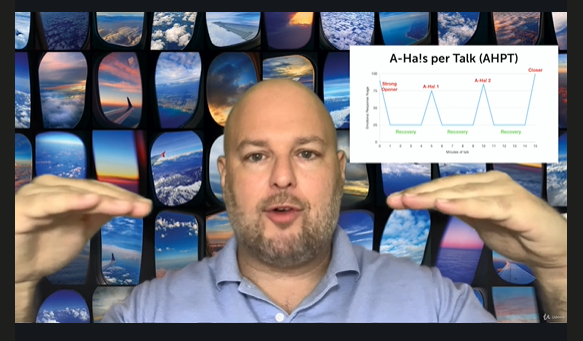
A-Ha Moments section of the course on Udemy. Click here for more information.